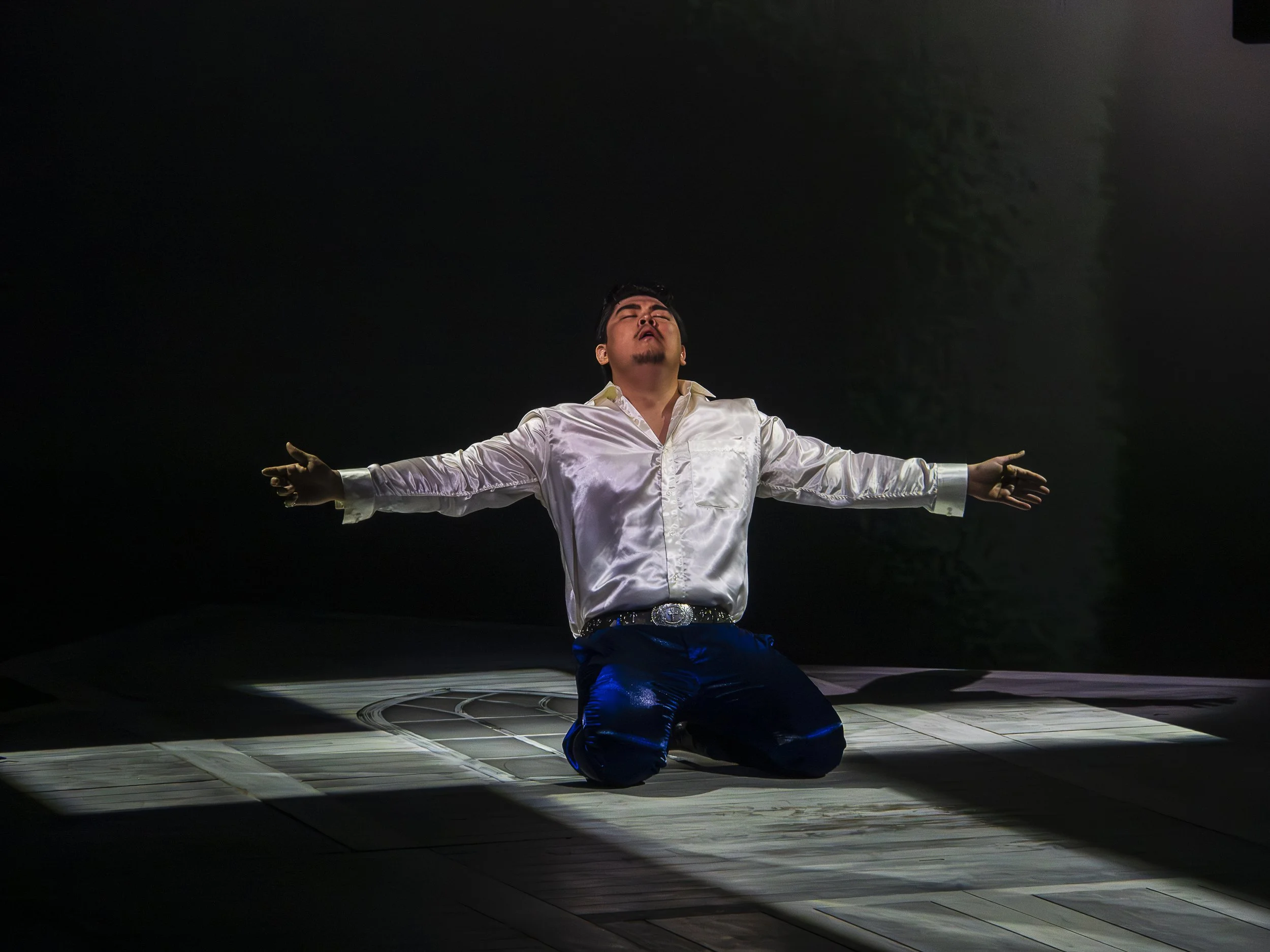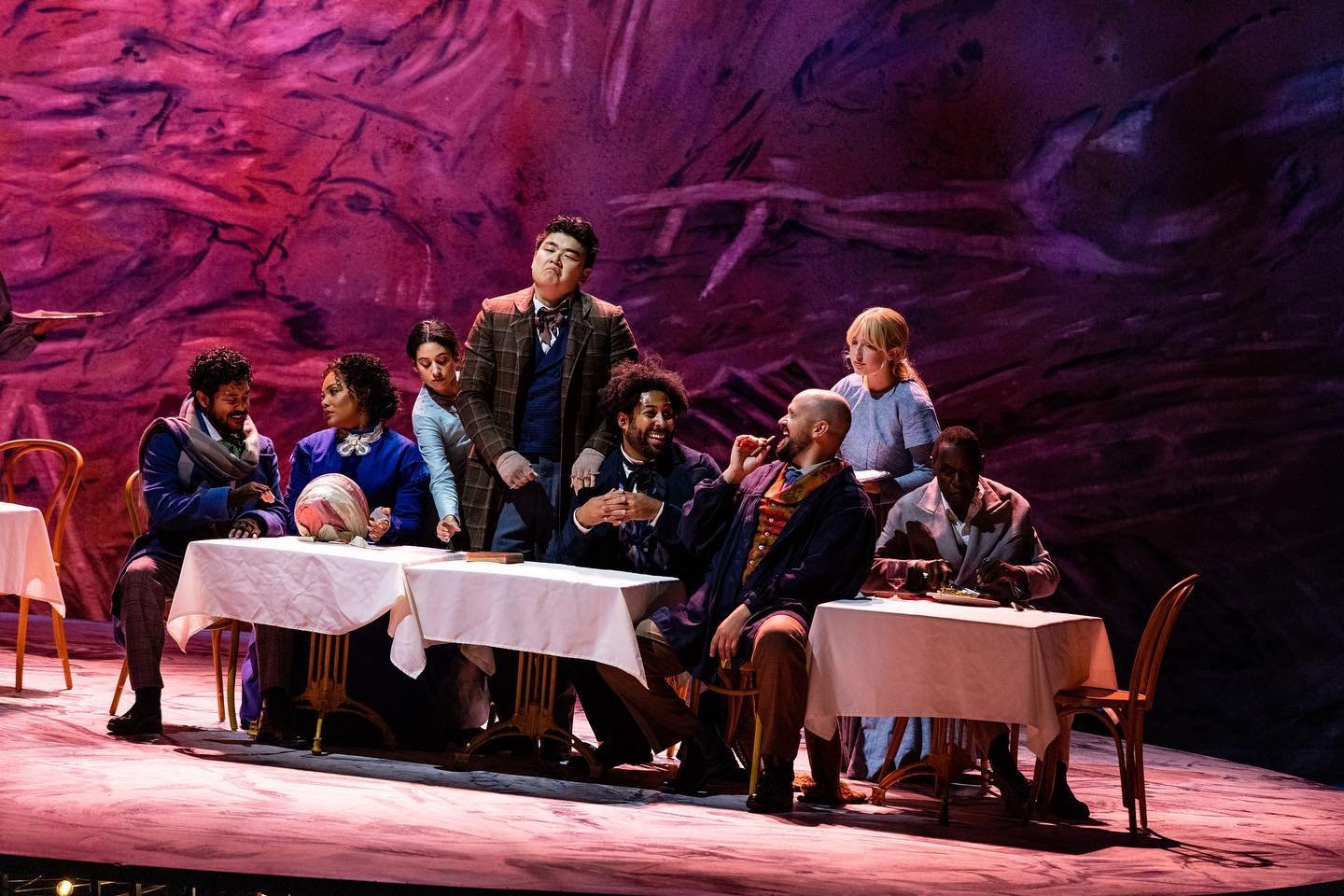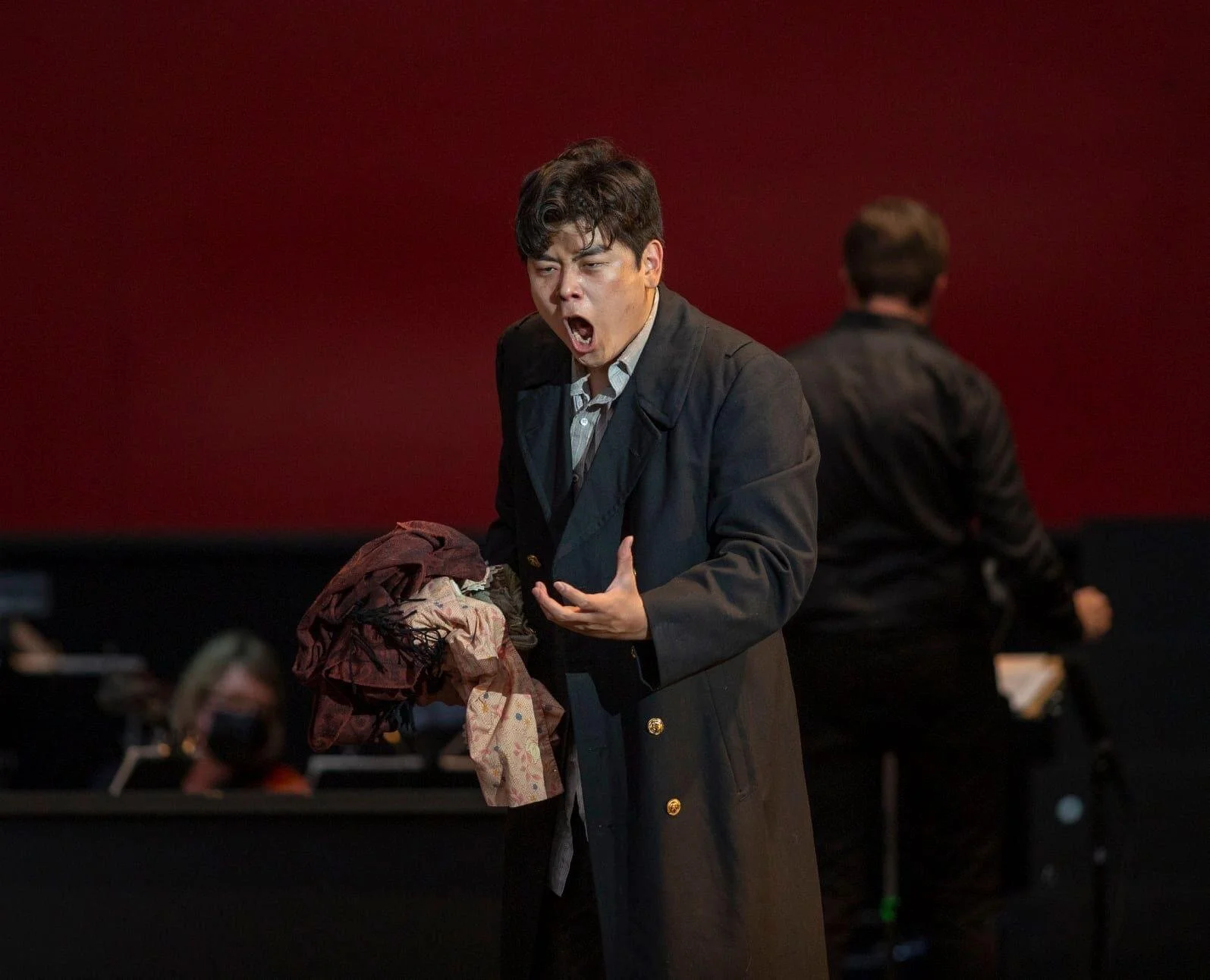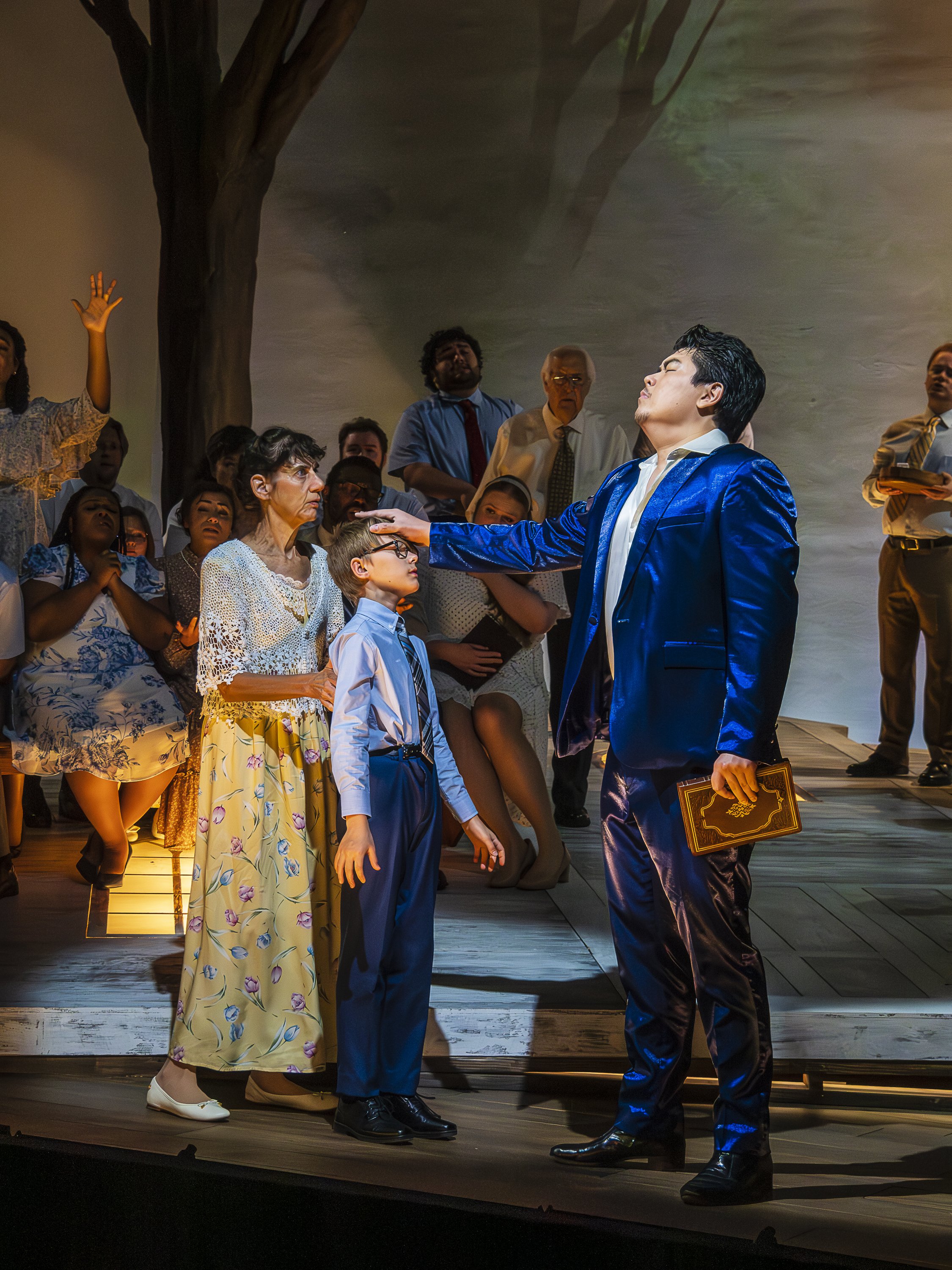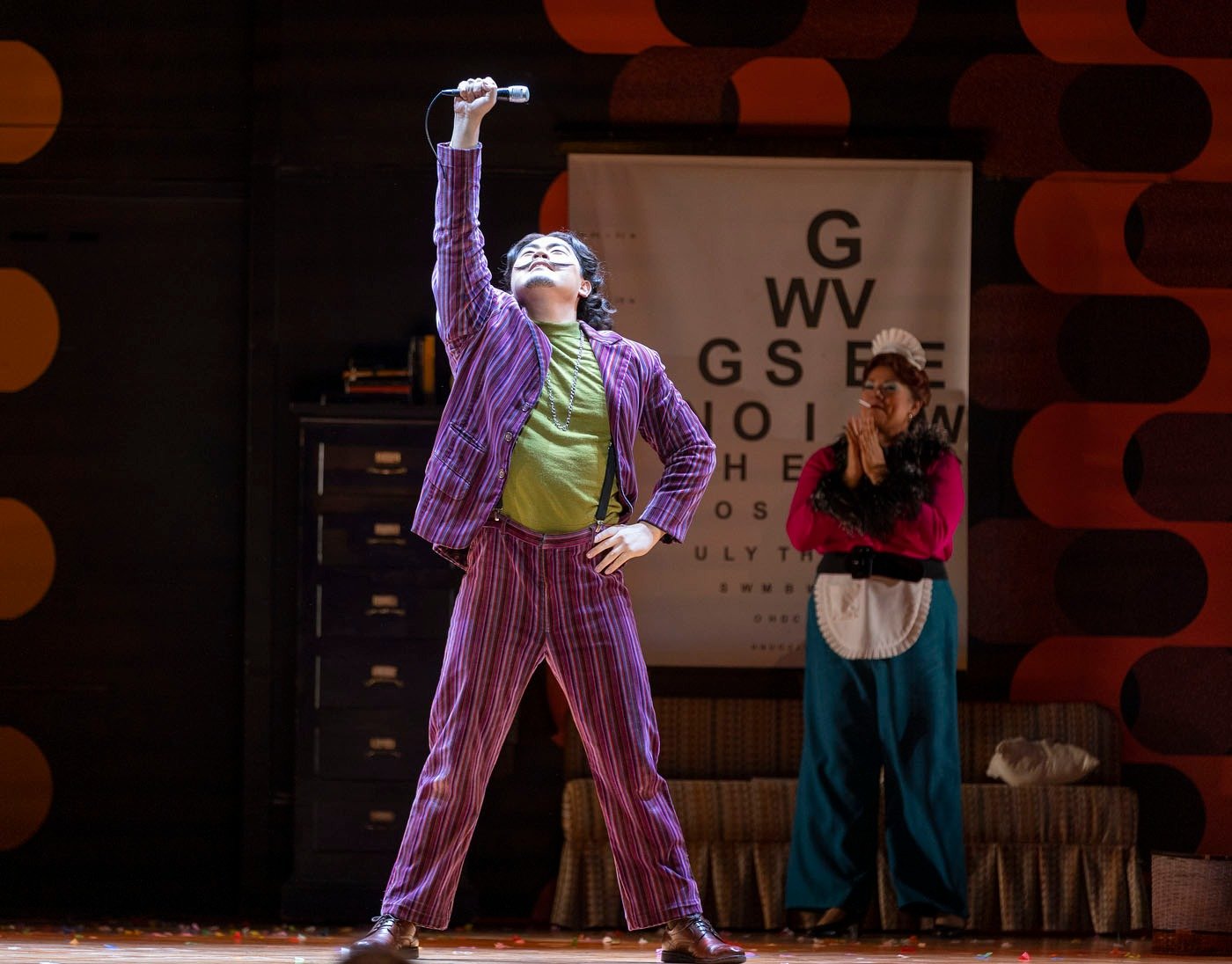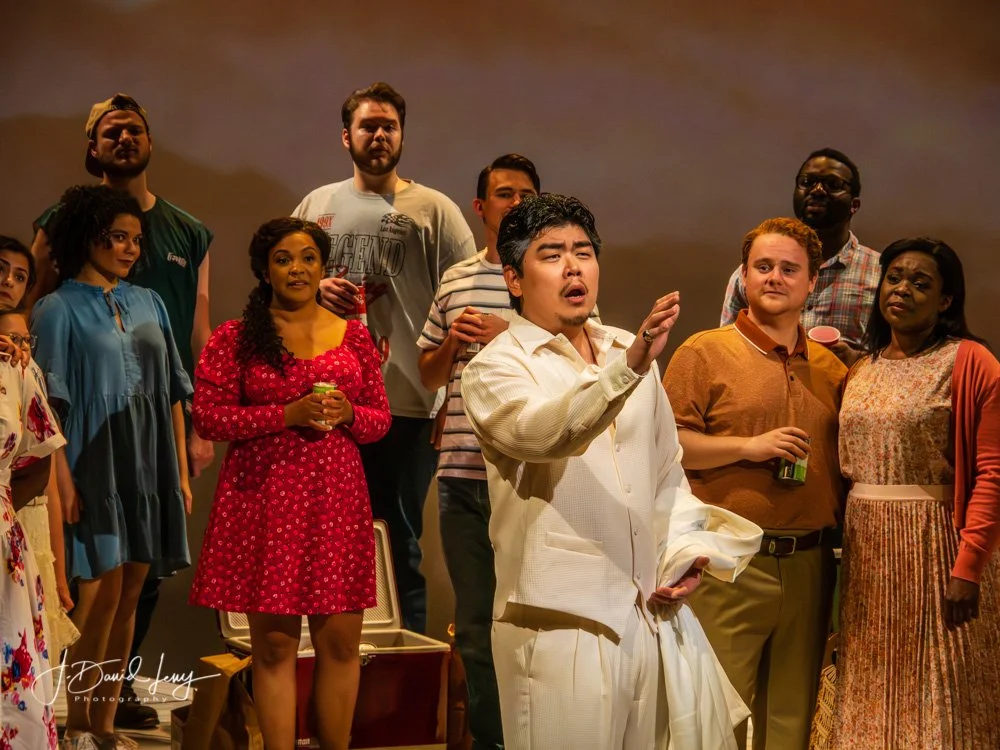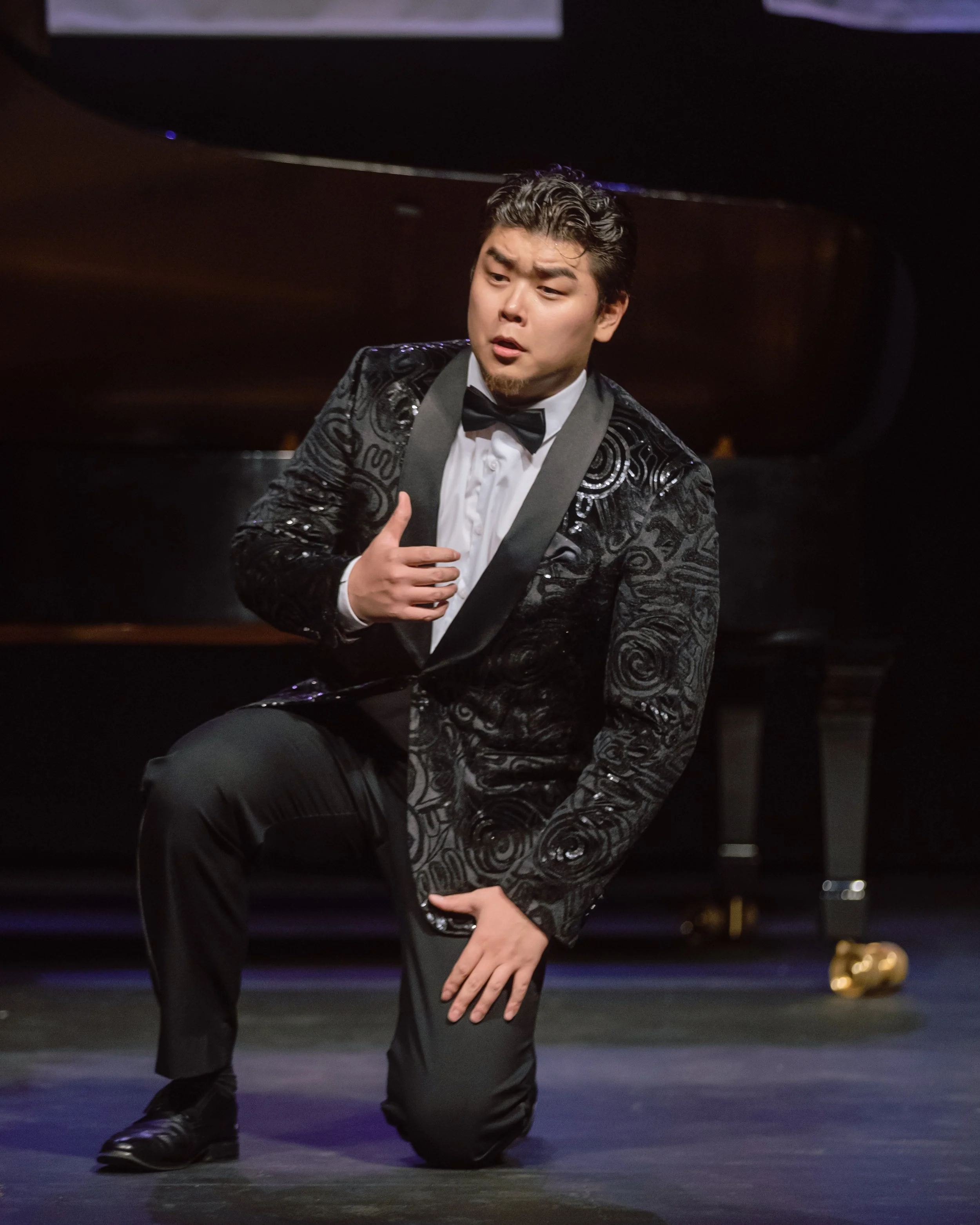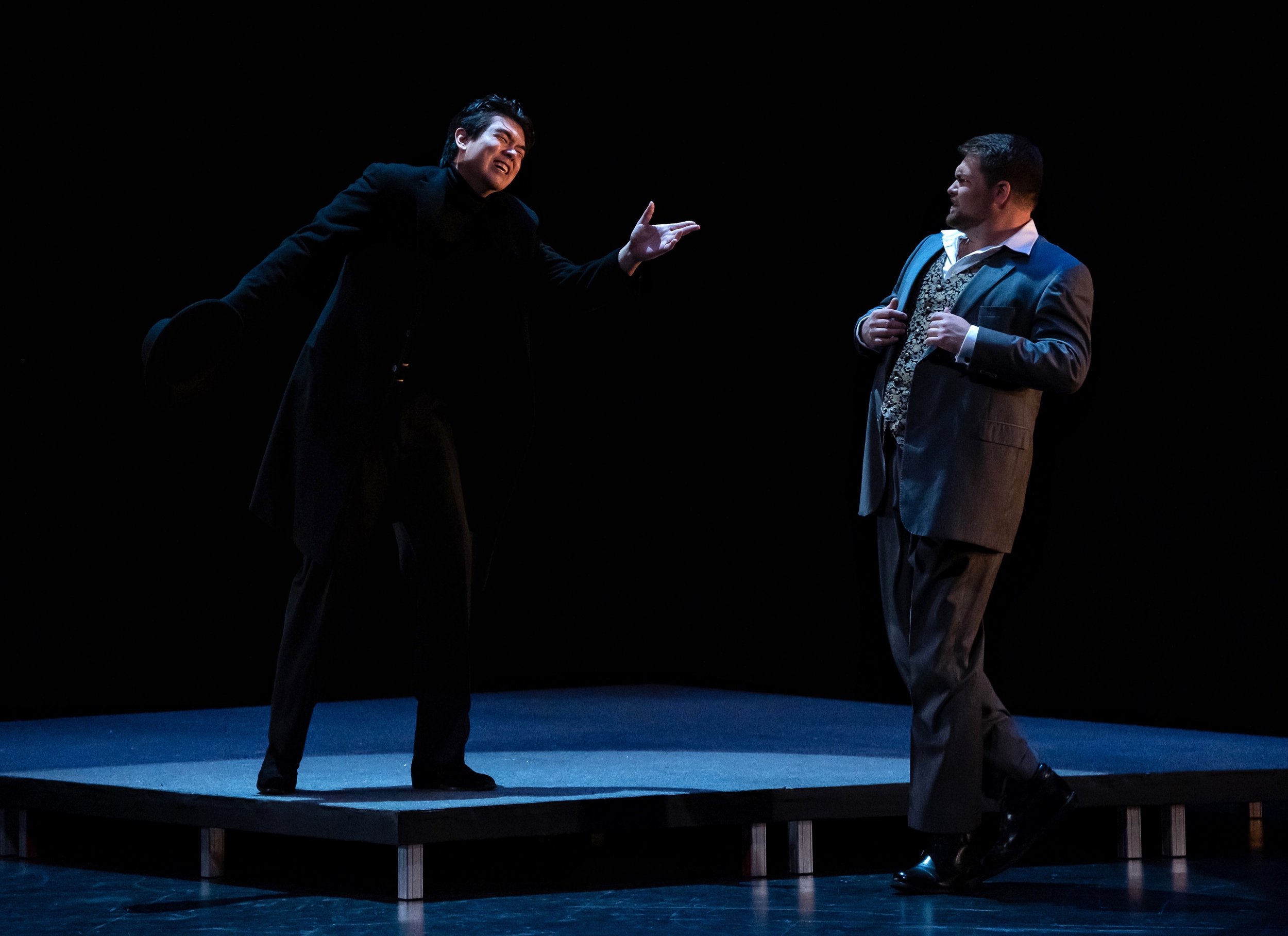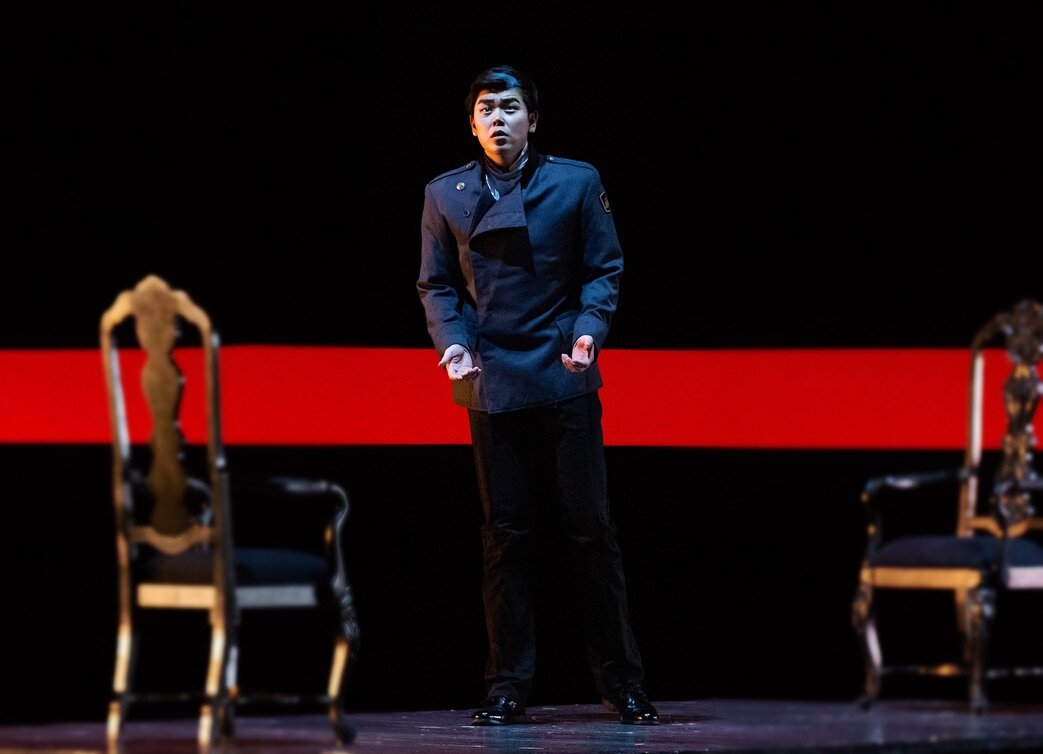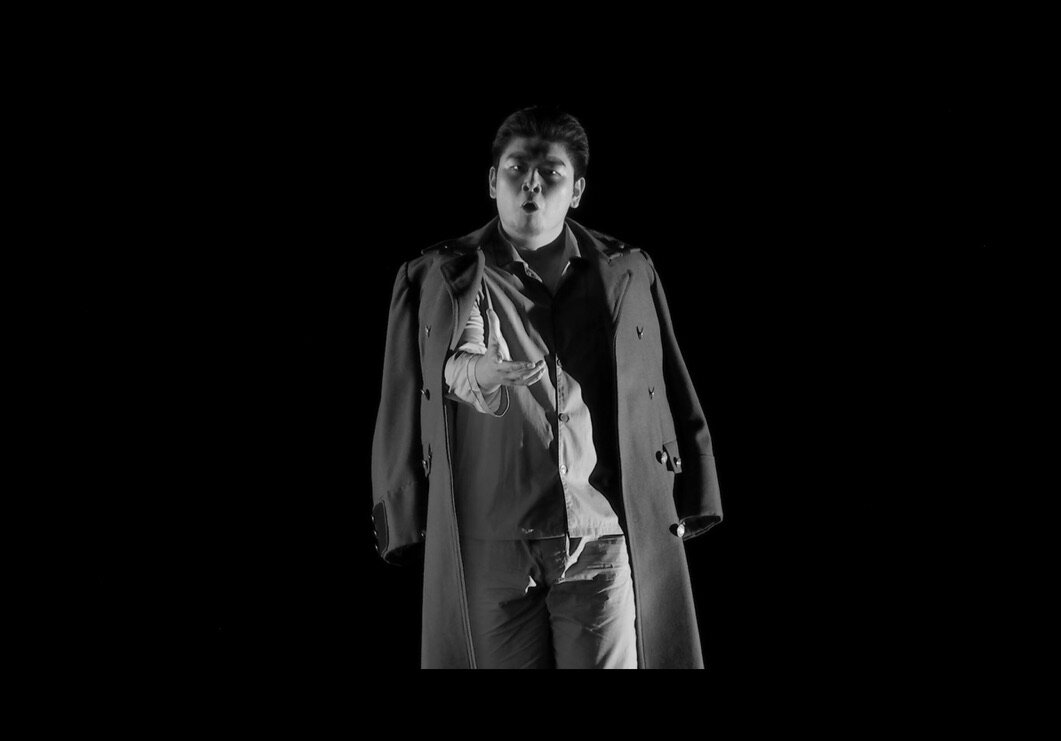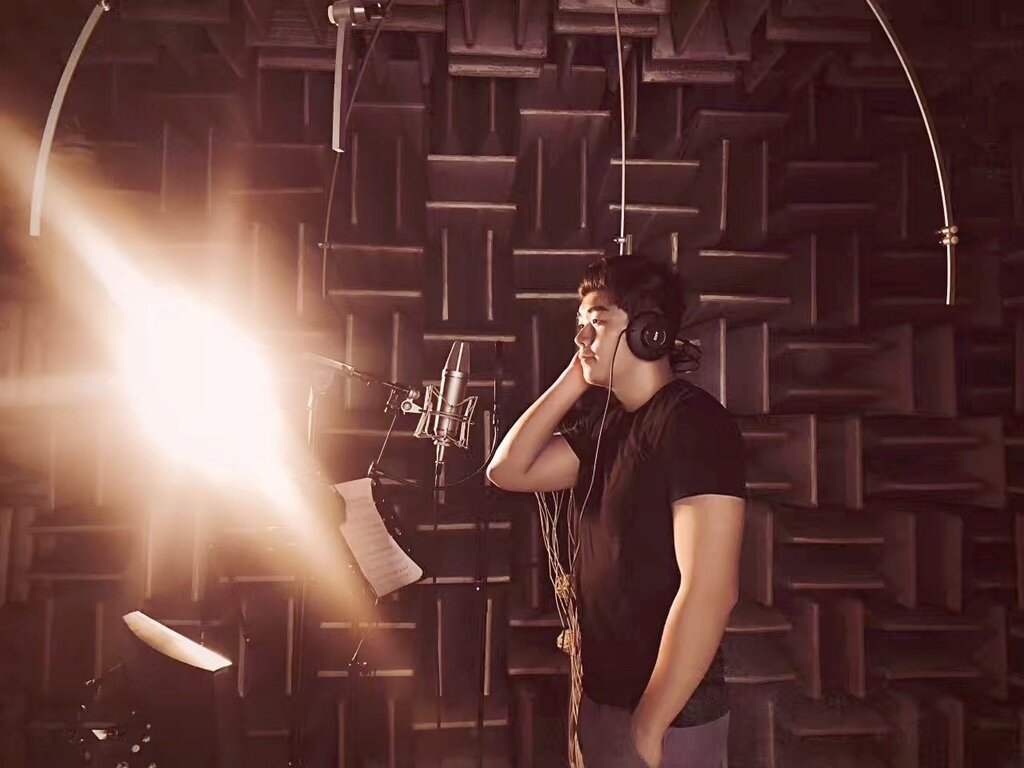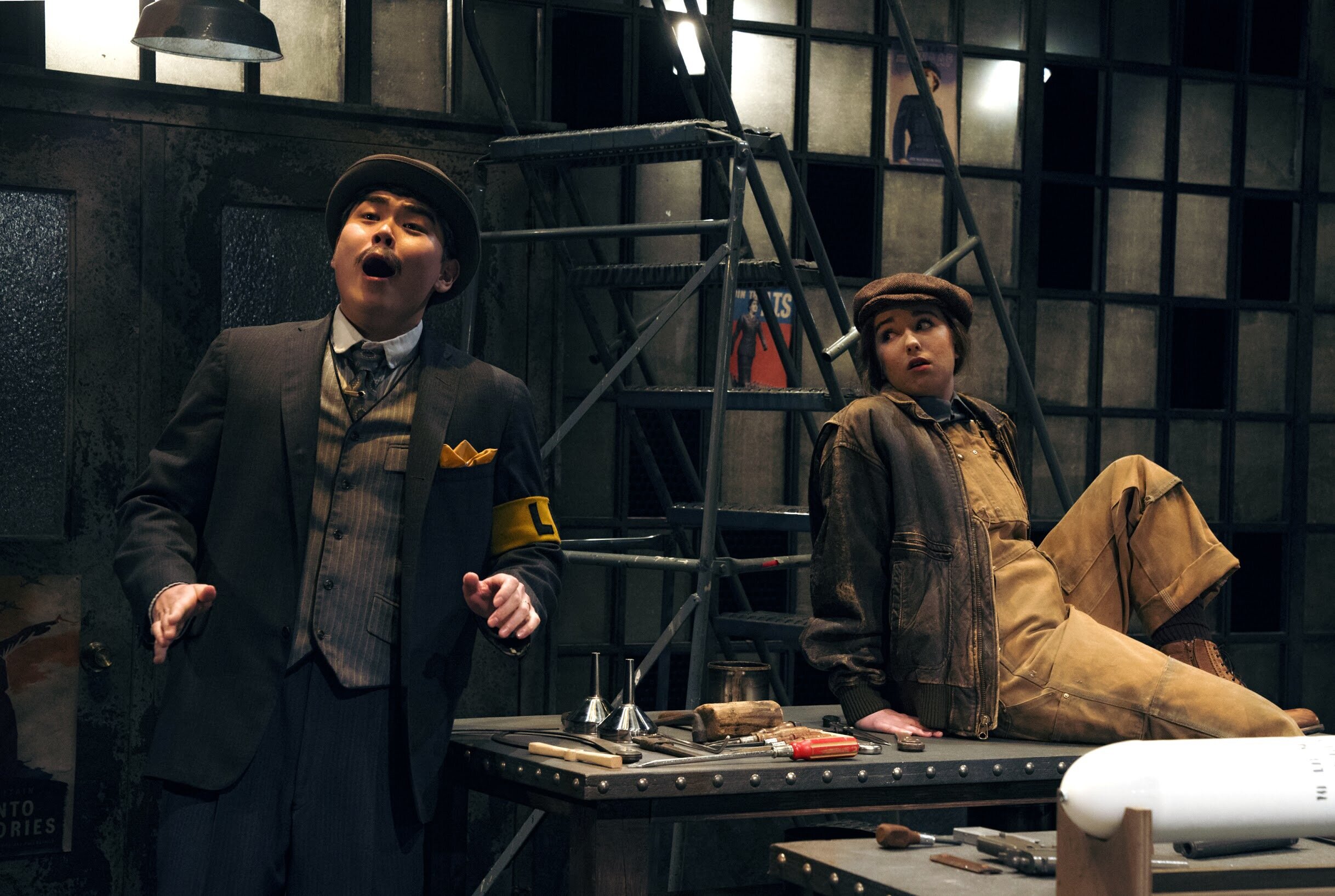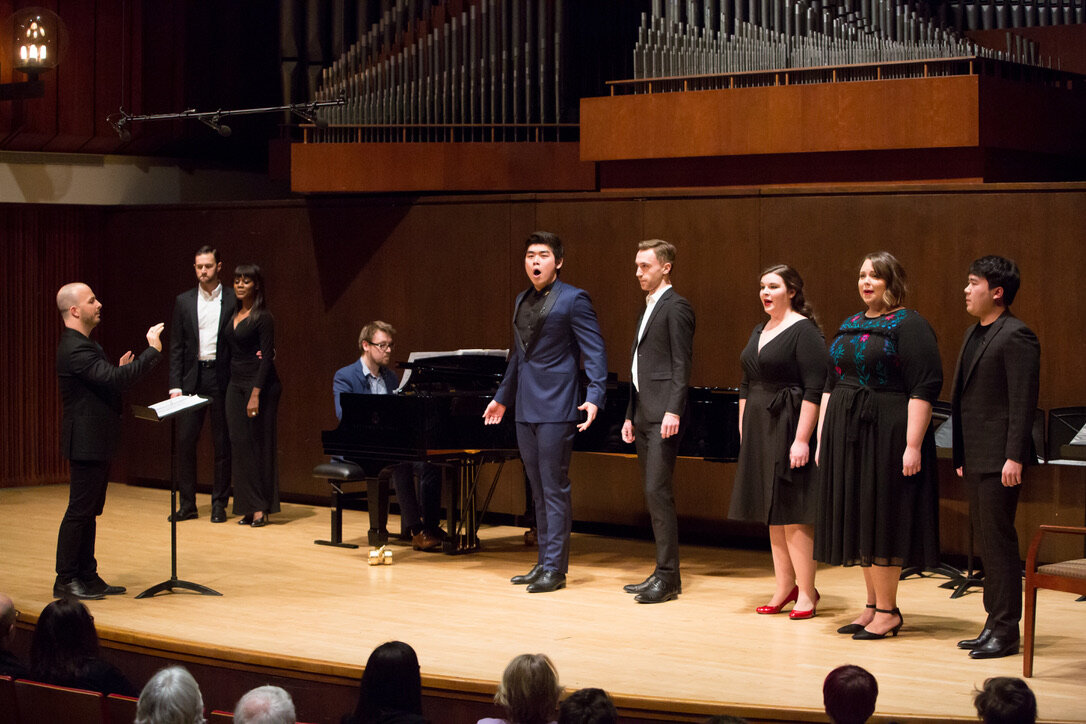

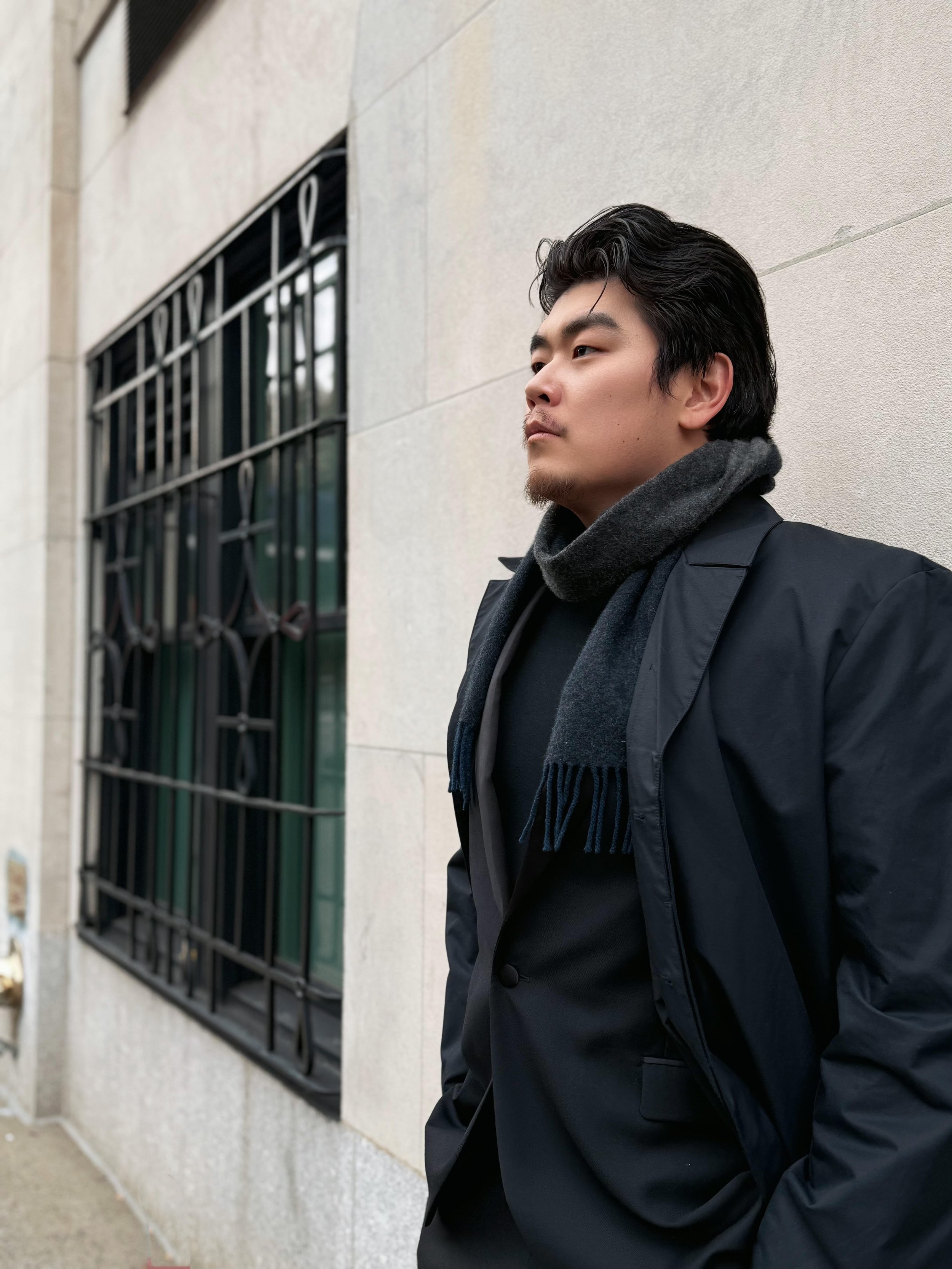
bass William Guanbo SU. Photo: Linzi Pan.
Bio
William Guanbo Su is heralded by the New York Times for “musical taste, honest execution of Handelian ornaments and bel canto filigree, and a solid voice,” In the 2026-27 season, he returns to the Metropolitan Opera as Colline in La bohème and Angelotti in Tosca. He makes role debuts in returns to Dallas Opera as Timur in Turandot and Seattle Opera as Nilakantha in Lakmé as well as sings Sarastro in Die Zauberflöte with Florentine Opera. He returns to Don Basilio in Il barbiere di Siviglia with Santa Fe Opera and Fort Worth Opera, also singing a Male Consort and the Executioner in the American premiere of Dean’s Of One Blood at the former. Future seasons include further returns to the Metropolitan Opera, Santa Fe Opera, and Irish National Opera. Last season he returned to the Metropolitan Opera as Masetto in Don Giovanni and Santa Fe Opera as Garibaldo in Rodelinda. He also made debuts with Los Angeles Opera as Colline in La bohème, Irish National Opera as Oroveso in Norma, and English Concert as the title role of Handel’s Hercules on a tour of the United Kingdom and the United States.
His other recent performances include Basilio in Il barbiere di Siviglia with Seattle Opera; Publio in La clemenza di Tito with Staatsoper Hamburg; Blitch in Susannah with Opera Theatre of Saint Louis, Basilio in Il barbiere di Siviglia and Angelotti in Tosca with Austin Opera; Colline in La bohème with Dallas Opera, Boston Lyric Opera and Utah Opera; Raimondo in Lucia di Lammermoor with Nashville Opera; the Speaker in the beloved English presentation of The Magic Flute and Angelotti and the Jailer in Tosca at the Metropolitan Opera; Alidoro in La Cenerentola with Opera Maine, Somnus and Cadmus in Semele with Atlanta Opera; and Bonze in Madama Butterfly in a return to Houston Grand Opera and at the Grand Tetons Music Festival. At the Aspen Music Festival, hesang his first performances of Sarastro in Die Zauberflöte, Basilio in Il barbiere di Siviglia, and Garibaldo in Rodelinda.
He made his Carnegie Hall debut with the Cecilia Chorus of New York singing Bach’s Christmas Oratorio and returned to the stage a year later for Handel’s Messiah with the same organization. He joined the American Symphony Orchestra as Simon in Handel’s Judas Maccabeus and Martinů’s The Epic of Gilgamesh and has sung Beethoven’s Symphony No. 9 with the Northwest Florida Symphony Orchestra and at the Cathedral of St. John the Divine in New York City.
He is a former member of the prestigious Studio of the Houston Grand Opera at which he sangZuniga in Carmen, the First Officer in Dialogues des Carmélites, Second Armed Man in Die Zauberflöte—while also being responsible for Sarastro, Mandarin in Turandot—while also being responsible for Timur, and the Duke of Verona in Roméo et Juliette. He also sang the Usher in Rigoletto, but his scheduled performances of Sparafucile were cancelled by the COVID-19 pandemic. While a participant in the Académie Vocal Residence at the Festival d’Aix-en-Provence, he sang the Demon in Pergolesi’s Li prodigi della divina grazia nella conversione e more di San Guglielmo Duca di Aquitaina with Les Talens Lyriques.
As an ambassador for Opera for Peace, he sang Verdi’s “O tu Palermo” from I vespri siciliani for that organization’s digital concert celebrating World Opera Day 2020. He is a former Gerdine Young Artist of the Opera Theatre of Saint Louis, at which he sang Count Ceprano in Rigoletto and covered Figaro in Le nozze di Figaro. He joined Lyric Opera of Chicago’s Lyric Unlimited for its production of Perla’s An American Dream. While at The Juilliard School, he sang the Commendatore in Don Giovanni and Pluton in Hippolyte et Aricie.
Mr. Su was a Metropolitan Opera Laffont Competition Grand Finals winner and won second prize in the Eleanor McCollum Competition at Houston Grand Opera. He won first prize in the Liederkranz Foundation’s Song/Lieder Competition in 2017 and, in 2018, received third prize in the Gerda Lissner Opera Competition. He received his Master of Music degree from The Juilliard School and his Bachelor of Music Degree from the Manhattan School of Music. He completed further studies at the Franz Schubert Institute in Austria.
Raves
“William Guanbo Su was riveting as the lascivious evangelist Olin Blitch, demonic in the show Revival Scene, but if anything, more impressive in his subsequent confrontation with Susannah, where, before he rapes her, Blitch tells her": ‘I’m a lonely man.’ At that moment, Su brought ambiguity and shading to his portrayal: the preacher remained a low life, but one whose character was rooted in deep-seated vulnerability.”
— Opera News
Gallery